
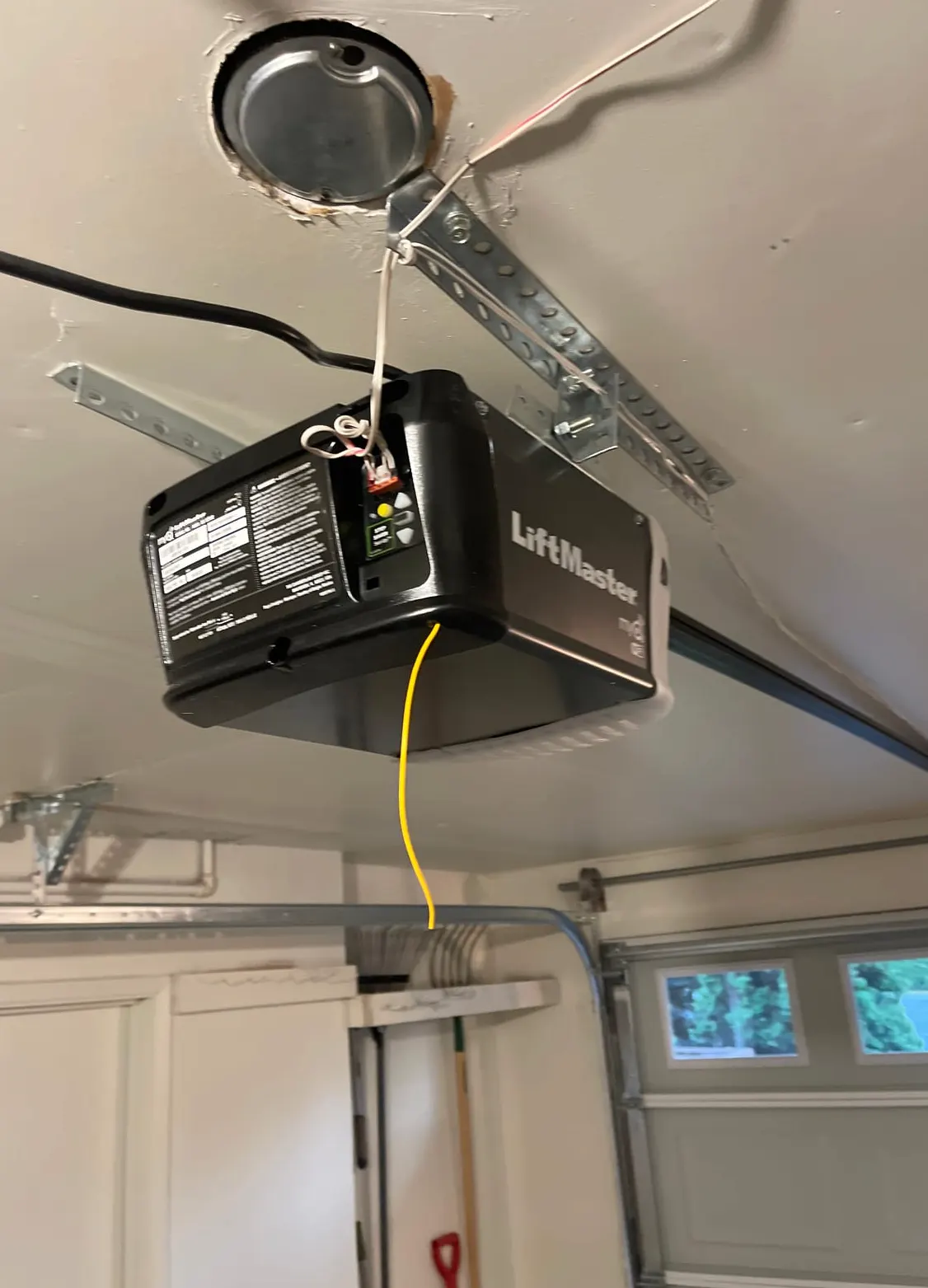
If your garage door closes partway, reverses, or refuses to close at all while the opener's light blinks, assume a photo-eye sensor problem before you assume anything bigger. The exceptions: if the door won't even attempt to close, if it grinds or bangs on the way down, or if it closes fine by itself but not with the remote, the issue is probably mechanical or electrical, not the sensors.
What Photo-Eyes Actually Do
Photo-eye sensors are the two small boxes mounted a few inches off the floor on either side of your garage door track. One sends an invisible infrared beam, the other receives it. As long as that beam is unbroken, the opener assumes the path is clear. Break the beam, or lose the connection between the sensors, and the opener refuses to close the door or immediately reverses it. This is a federally mandated safety feature meant to stop a closing door from coming down on a child, pet, or car.
Why They Trip
Most sensor problems are mechanical, not electrical. Common culprits:
- Dirt and grime on the lenses. Garage floors kick up dust, and in winter that dust mixes with road salt residue tracked in on tires and boots. A thin film on either lens is enough to weaken the beam.
- Spider webs and insects. A single strand across the lens can scatter the beam just enough to cause intermittent failures that seem to come and go.
- Misalignment. Sensors are mounted on thin brackets that get bumped by bikes, lawn equipment, snow blowers, or a car bumper backing in too close. Even a slight knock can throw off alignment enough to cause problems.
- Direct sunlight. Low winter sun or bright afternoon light hitting the receiving sensor at the right angle can overpower the beam, especially if a door faces east or west.
- Condensation and cold. Big temperature swings between a heated house and an unheated garage can fog the lens covers or loosen wiring connections over time.
- Vibration from freeze-thaw cycles. As the slab shifts slightly with seasonal freezing and thawing, brackets mounted to the track can drift out of true alignment.
How Bad It Can Get
On the mild end, a dirty or misaligned sensor just means an annoying door that won't close, which is inconvenient but safe. On the serious end, a homeowner gets frustrated, decides the sensors are "broken anyway," and disconnects or bypasses them to get the door working again. That's where real risk starts. Without working sensors, a closing door has no way to detect a child darting underneath, a pet napping in the doorway, or a car that hasn't fully cleared the track. The spring and opener still have enough force to cause serious injury or damage, and that force doesn't change just because the safety feature is gone.
How to Clean and Align Them Yourself
- Power down first. Unplug the opener or switch off the breaker before touching wiring.
- Wipe both lenses with a soft, dry microfiber cloth. Avoid household glass cleaner, which can leave a film; a barely damp cloth with plain water works better.
- Check for obstructions between the two sensors — boxes, a broom, a trash can, cobwebs — anything low to the ground in the beam's path.
- Look at the indicator lights. Most sensors have a small LED. Steady lights on both units usually mean good alignment; a flickering or unlit light on one side points to a problem on that unit.
- Loosen the wing nut or bracket screw on the misaligned sensor and gently adjust its angle until the light steadies, then retighten without over-torquing, which can crack the bracket.
- Test with a broom handle laid flat across the sensor beam path at ground level while trying to close the door. It should stop and reverse immediately. If it doesn't, don't use the door until that's fixed.
If you've cleaned and aligned both sensors and the problem persists, the issue may be internal — a cracked lens, water intrusion, or a failing circuit board inside one of the units. Replacement sensor pairs typically run in the $50–$120 range nationally for parts alone, which is far cheaper than the alternative of running a door with no safety reverse.
When Not to Bypass Them
Some older openers have a setting or jumper that lets the door close without sensor input, and some homeowners resort to taping over or disconnecting a faulty sensor just to get the door moving again. Don't. There's no scenario where that trade-off makes sense:
- If you have kids, grandkids, or pets who use the garage as a path in and out, a bypassed sensor removes the one thing designed to protect them.
- If you store a vehicle, bikes, or equipment near the door's path, a door with no reverse function can come down on a bumper or bike rack before you notice.
- If the door is ever operated by someone unfamiliar with the workaround — a visitor, a teenager, a house sitter — they won't know to watch for a door that doesn't stop.
A door that won't close because of a sensor fault is an inconvenience you can work around for a day or two by closing it manually and locking it by hand. A door that closes on someone because the safety feature was disabled is a different kind of problem entirely.
When to Call Raymore Garage Door Solutions
If you've cleaned the lenses, checked for obstructions, and realigned the brackets but the door still won't close reliably, it's worth having it looked at rather than living with a workaround. Our Garage Door Opener Service covers sensor diagnostics, wiring checks, and replacement when a unit has failed internally, and our Garage Door Maintenance visits include a full sensor alignment and function test as part of the seasonal tune-up — useful heading into winter when salt spray, temperature swings, and low sun angles all work against your sensors at once.
If your garage door in Raymore, MO is giving you trouble with the sensors — or anything else — give Raymore Garage Door Solutions a call. We'll get it diagnosed and fixed right, so the safety features that are supposed to protect your family actually do.