
What Skipping This Costs You
Put this off one more season and the bill isn't just a dented door. A garage door that fails during a high-wind event can buckle inward, rip off its tracks, or blow completely off the opening. Once that happens, wind pressure gets inside the garage and pushes up against the roof from underneath — that's how homes lose shingles, roof decking, and sometimes whole roof sections in a bad blow. You're also looking at an emergency repair call during the worst possible weather, a garage full of rain-soaked belongings, and a vehicle sitting exposed to hail or flying debris. None of that is cheap, and almost all of it is avoidable with an hour of attention now.
Why the Garage Door Is Your Home's Weakest Wall
Every other exterior wall on your house is solid, braced, and tied into the frame. The garage door is a 100+ square foot panel made of thin steel or aluminum, hung on tracks, and held up mostly by springs and a handful of rollers. It's the largest opening in most homes, and in high wind it acts like a sail. When wind pressure builds against a weak or aging door, it can bow, pop off its tracks, or cave in entirely — and once it fails, the wind has a direct path into your attic and roofline. That's why building codes in wind-prone regions increasingly call for reinforced or wind-rated garage doors; the door isn't just cosmetic, it's structural.
The Weather Pattern Behind This
Fall in this part of Missouri isn't just about the first freeze. As cold fronts start pushing through more aggressively, they bring sudden straight-line wind gusts, sometimes alongside severe thunderstorms that linger into late autumn before winter settles in. Those fronts can hit with little warning compared to a slow-moving winter storm. And while spring gets the headlines for tornado season, the prep work you do now — tightening hardware, checking the door's structural integrity, addressing rust or wear — is the same prep that will matter when spring storm season rolls back around. Taking care of it in fall means you're not scrambling to find an opening in a technician's schedule right as severe weather returns.
What to Actually Check
- Tracks and rollers: Look for bent sections, loose bolts, or rollers that are cracked or worn flat. A door under wind load needs tracks that are perfectly aligned.
- Hinges and hardware: Tighten anything that's loose. Rust at the hinges or end panels is a sign the metal is weakening, especially after a winter of road salt exposure.
- Weatherstripping: Cracked or missing seals let wind-driven rain in, and a gap at the bottom can let wind actually get a grip under the door panel.
- Panel condition: Dents or soft spots reduce the door's ability to resist pressure. A door that's already compromised in one spot will fail there first.
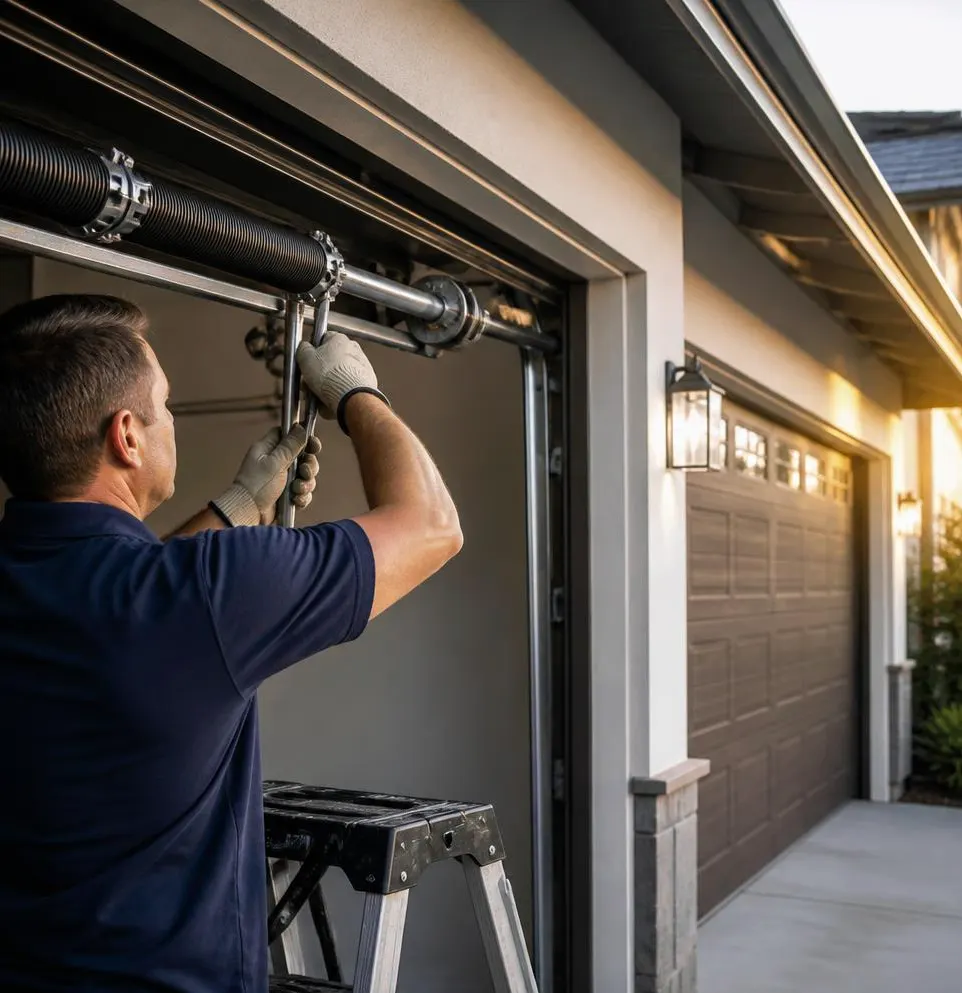
- Spring balance: Disconnect the opener and lift the door halfway by hand — it should stay put. If it drifts up or crashes down, the springs are off and the door won't perform predictably under stress.
- Manual release and backup power: Know how to manually disengage the opener in case of a power outage during a storm, and keep the emergency release cord accessible.
- Debris around the opening: Clear branches, patio furniture, or loose items near the garage that could become airborne and strike the door.
Reinforcing vs. Replacing
If your door is structurally sound but lacks wind resistance, a horizontal strut retrofit kit can stiffen the panels without a full replacement — a reasonable middle step for a door that's otherwise in good shape. If the door is older, visibly weak, or already has rust and dents, replacing it with a heavier-gauge, wind-rated door is the more durable fix. Retrofit kits run cheaper upfront (generally a few hundred dollars installed) but a full wind-rated door replacement, while a bigger investment (often a couple thousand dollars depending on size and material), resets the clock on the whole system — springs, tracks, and opener included.
When to Call Raymore Garage Door Solutions
If your door is already showing rust, misalignment, or a spring that doesn't hold balance, don't wait for the next wind event to find out it fails. Our Garage Door Maintenance service covers a full inspection of tracks, hardware, seals, and spring tension so you know exactly where your door stands before storm season tests it. If a storm has already damaged your door or opener, our Emergency Garage Door Service gets a technician out fast to secure the opening and get you back to normal.
Raymore Garage Door Solutions serves Raymore, Belton, Peculiar, Lee's Summit, Harrisonville, Pleasant Hill, Grandview, and Kansas City. Call us today to get your garage door checked and storm-ready before the next front moves through.