
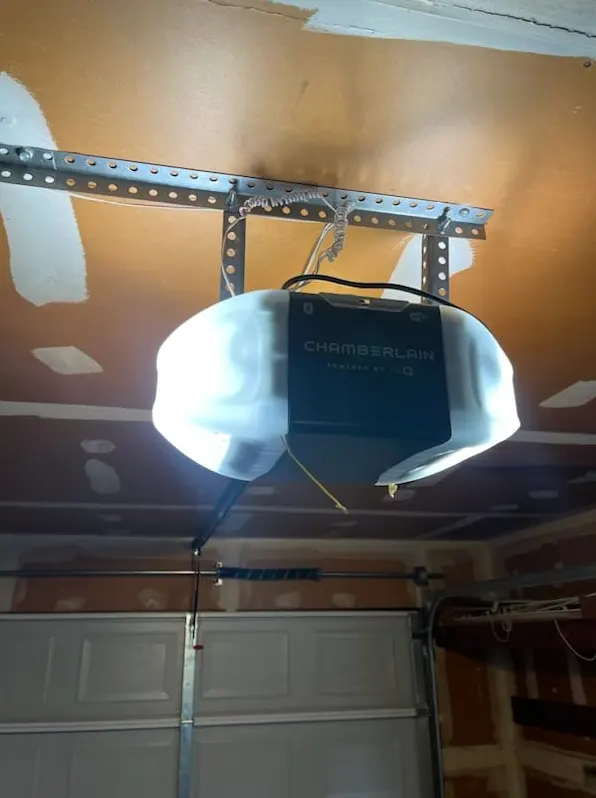
What Another Season With the Old Opener Actually Costs You
Most homeowners don't think about their garage door opener until it fails, and failure usually shows up at the worst possible moment: an ice storm knocks out power and your chain-drive opener with no battery backup won't budge, or you're thirty minutes from home wondering if you actually closed the door before a thunderstorm rolls through. A basic opener with no remote visibility means you're guessing. That guessing costs you heat loss through a door left cracked open on a ten-degree morning, a soaked garage floor after a spring downpour finds its way under a door that didn't fully seat, or a package stolen from an open bay because nobody noticed. None of that requires a dramatic opener failure — it just requires not knowing what the door is doing when you're not standing in front of it.
A smart opener doesn't fix a bad door, worn springs, or a misaligned track. But it closes the information gap that causes a lot of these small, preventable losses, and in a climate with the kind of swings this part of Missouri sees, that gap matters more than people expect.
What a Smart Opener Actually Does Day to Day
Strip away the marketing and a smart opener is doing a handful of practical things, every day, whether you notice or not:
- Status confirmation. You get a notification telling you the door is open or closed, instead of relying on memory.
- Remote control. You can close a door you forgot about from your phone, which matters most during storm season or a sudden cold snap.
- Activity logs. Most apps show you a timestamped history — useful for sorting out whether a teenager left the door open or a delivery driver opened and closed it.
- Scheduled or geofenced actions. Some units will auto-close after a set time or when your phone leaves a certain radius, which is a quiet way to stop heat loss during winter without thinking about it.
- Guest access. You can grant temporary access to a dog walker or contractor without handing out a code or a key.
That's the realistic day-to-day value. It's not glamorous, but it solves the actual problem most people have: not knowing, and not being able to act once they do know.
Features Worth Paying For in This Climate
Given cold winters with ice and salt, humid summers, and a real tornado season in spring, a few features earn their keep here specifically:
- Battery backup. Power outages happen during ice storms and spring severe weather. An opener that keeps working on battery power when the grid doesn't means you're not stuck outside, or stuck with a door you can't close before a storm hits.
- Weather-rated motor and electronics. Garages here see big swings between a humid 90-degree summer and a frozen winter night. Cheaper electronics can struggle with that range over the years; a unit rated for a wider temperature band holds up better long-term.
- Rolling code encryption. Older fixed-code remotes can be copied with inexpensive scanners. Rolling code is now standard on most reputable smart openers, but it's worth confirming rather than assuming.
- Multi-user, multi-device access. If more than one person in the house needs to open the door, make sure the app supports multiple accounts cleanly instead of one shared login.
- Manual release that still works. Every opener should have a working manual disconnect for when power and battery both fail. Test it once a year, ideally before winter.
Features You Can Skip Without Losing Anything
Not every feature on the box is worth paying extra for:
- Built-in cameras with elaborate AI package detection. Nice to have, but you can usually add a separate camera for less than the premium charged for a bundled one, and swap it out independently if it fails.
- Color touchscreen wall consoles. They look modern but add little over a basic button, and in a garage exposed to summer humidity and winter temperature swings, more electronics on that wall panel is one more thing that can degrade.
- Voice assistant integration as a selling point. Convenient if you already use a smart speaker, but it shouldn't be the deciding factor between two openers — it's a feature layered on top, not the core function.
Questions to Ask Before You Buy
- Does this opener work with my current door and track, or does it require a new rail, belt, or chain system?
- Is battery backup included, or is it a separate add-on purchase?
- What's the horsepower or lift capacity, and does it match my door's size and weight — insulated doors and larger double doors need more than a basic motor can give?
- How does the app perform if garage wifi signal is weak, which is common in detached or far-corner garages?
- What's the warranty on the motor versus the smart components, since those often have different coverage periods?
- Can I keep using my existing wall button and remotes, or does everything need to be replaced?
When to Call Raymore Garage Door Solutions
If you're shopping for a smart opener but aren't sure it'll fit your existing door, track, or garage wiring, that's worth a quick conversation before you buy. We handle Garage Door Opener Service for homes that want to upgrade an older unit without replacing the whole door, and full Garage Door Installation when the door itself needs to come down with it. We'll tell you honestly whether your current setup can handle a smart upgrade or whether something else needs attention first.
If you're in Raymore, Belton, Peculiar, Lee's Summit, Harrisonville, Pleasant Hill, Grandview, or Kansas City and you're ready to stop guessing what your garage door is doing, give Raymore Garage Door Solutions a call. We'll help you pick an opener that actually fits your door and your season, not just the one with the most buttons.