
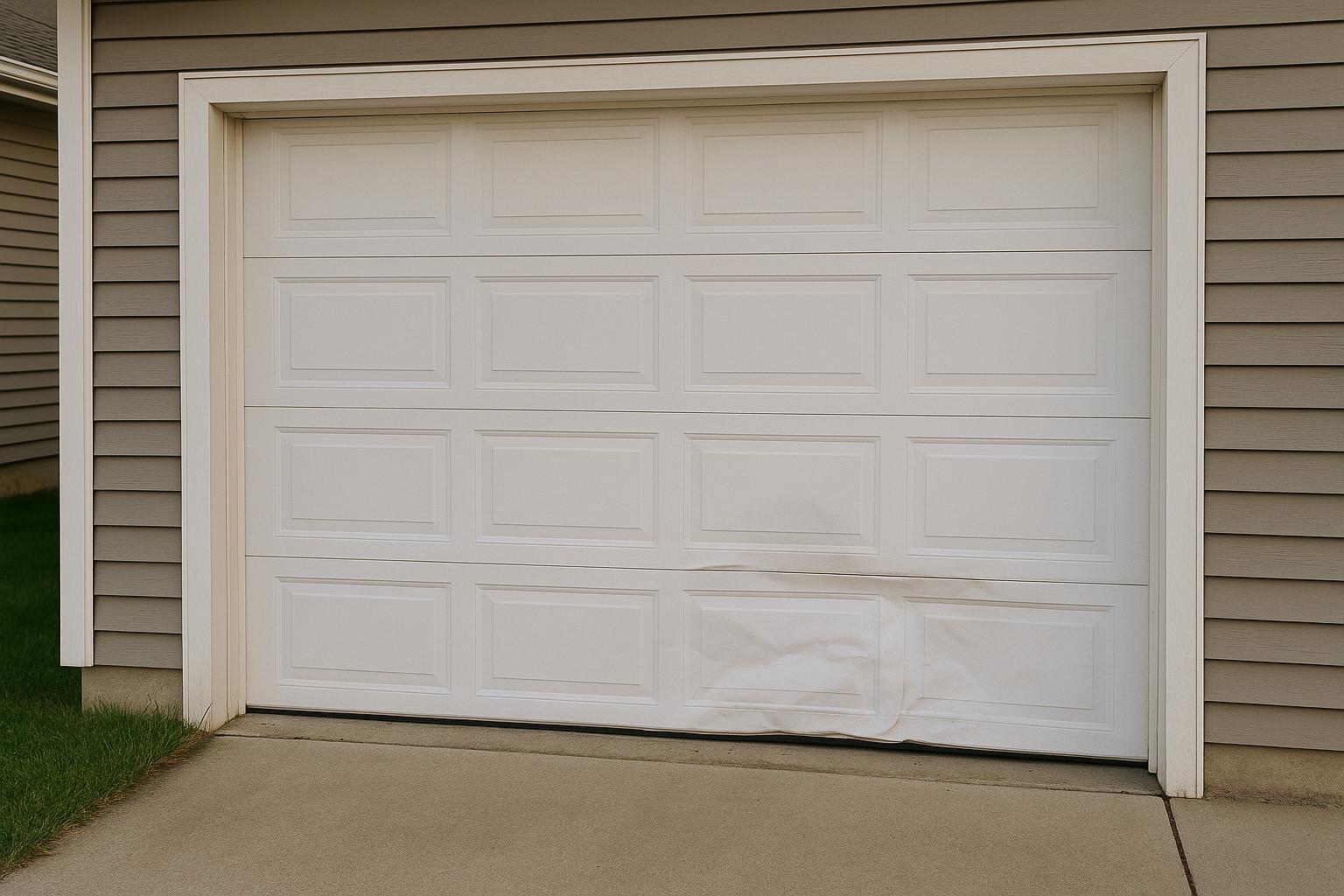
That Dented Panel Is More Than Just an Eyesore
Maybe someone backed into the garage door. Maybe a stray baseball found its mark. Or maybe years of Missouri weather have finally taken their toll. Whatever the cause, you're now staring at a damaged garage door panel and wondering: Do I really need to replace the entire door, or can I just fix this one section?
It's one of the most common questions we hear from homeowners in Raymore, and the answer isn't always straightforward. The good news is that in many cases, replacing a single panel is a perfectly viable and cost-effective solution. But there are situations where a full garage door replacement is the smarter long-term investment. Let's break down how to make the right call.
How Garage Door Panels Work
Most modern garage doors are built with individual horizontal panels, also called sections, that are connected by hinges and move along a track system. A standard residential garage door typically has four or five panels stacked on top of each other.
Because of this modular design, it's often possible to remove and replace a single damaged panel without disturbing the rest of the door. However, several factors determine whether this approach makes sense for your specific situation.
When Replacing a Single Panel Makes Sense
A single panel replacement is usually the right choice when:
- Only one panel is damaged. If the dent, crack, or break is isolated to one section and the rest of the door is in good shape, there's no reason to replace the entire thing.
- Your door is relatively new. If your garage door is less than 10 years old, the manufacturer likely still produces matching panels. This makes it easy to get an exact replacement that blends seamlessly with the rest of the door.
- The track, springs, and hardware are fine. If the damage is purely cosmetic or limited to the panel itself, and the mechanical components are functioning properly, a panel swap is straightforward.
- You're working within a tight budget. Replacing one panel costs significantly less than a full door replacement — often saving you hundreds or even thousands of dollars.
When a Full Garage Door Replacement Is the Better Investment
On the other hand, there are clear situations where replacing the entire garage door makes more financial and practical sense:
- Multiple panels are damaged. If two or more panels need replacement, the cost can start approaching the price of a new door. At that point, you're better off investing in a complete upgrade.
- Your door model has been discontinued. Garage door manufacturers regularly update their product lines. If your door is 15 or 20 years old, finding an exact matching panel can be difficult or impossible. A mismatched panel stands out and can hurt your home's curb appeal.
- The door has structural issues. If the impact that damaged the panel also bent the tracks, broke a hinge, or knocked the door out of alignment, patching one panel won't solve the underlying problem.
- Your door is near the end of its lifespan. The average garage door lasts 15 to 30 years depending on material and maintenance. If yours is already showing signs of age — rust, warping, difficulty opening and closing — it makes sense to replace it now rather than sinking money into a panel that will need replacing again soon anyway.
- You want to improve energy efficiency or security. Older garage doors often lack proper insulation and modern safety features. A new insulated garage door can make a noticeable difference during Raymore's hot summers and cold winters, potentially lowering your energy bills and keeping your garage more comfortable year-round.
What About the Color Match?
This is a detail many homeowners overlook. Even if the manufacturer still makes your panel style, the color of your existing door has likely faded from years of sun exposure. A brand-new panel installed next to weathered ones can look noticeably different.
In some cases, you can repaint the entire door after the new panel is installed to create a uniform appearance. But if the color difference is dramatic or you have a specialty finish, this is worth discussing with your garage door technician before committing to a single panel replacement.
Can You Replace a Garage Door Panel Yourself?
We understand the temptation to turn this into a weekend DIY project, but we strongly advise against it. Garage door panels are heavy, and removing one requires carefully managing the tension in the door's spring system. An improperly installed panel can lead to:
- The door falling off the tracks
- Gaps that let in moisture, pests, and cold air
- Uneven wear on springs and cables, leading to premature failure
- Serious injury from spring tension or the weight of the door
A professional technician has the tools, training, and experience to replace a panel safely and ensure the door operates correctly afterward.
How Much Does a Panel Replacement Cost?
The cost of replacing a single garage door panel varies based on the door's material, size, and whether the panel is still in production. Generally, homeowners can expect to pay between $200 and $800 for a single panel replacement including labor. A full garage door replacement, by comparison, typically ranges from $800 to $4,000 or more depending on the style, material, and insulation level.
Getting a professional assessment is the best way to understand your options and costs. A reputable garage door company will give you an honest recommendation based on the condition of your door — not just try to upsell you on a full replacement.
What to Do Next
If you're dealing with a damaged garage door panel in Raymore or any of the surrounding communities like Belton, Lee's Summit, or Pleasant Hill, the first step is to have a professional take a look. We'll assess the damage, check the rest of the door's components, and let you know whether a panel replacement or a full door installation is the best path forward.
At Raymore Garage Door Solutions, we believe in giving our customers straightforward answers. If a single panel will do the job, that's what we'll recommend. If the door needs to be replaced, we'll explain why and walk you through your options so you can make a confident decision.
Don't let a damaged panel compromise your home's security, curb appeal, or energy efficiency. Contact us today to schedule an inspection and get a clear, no-pressure recommendation.