
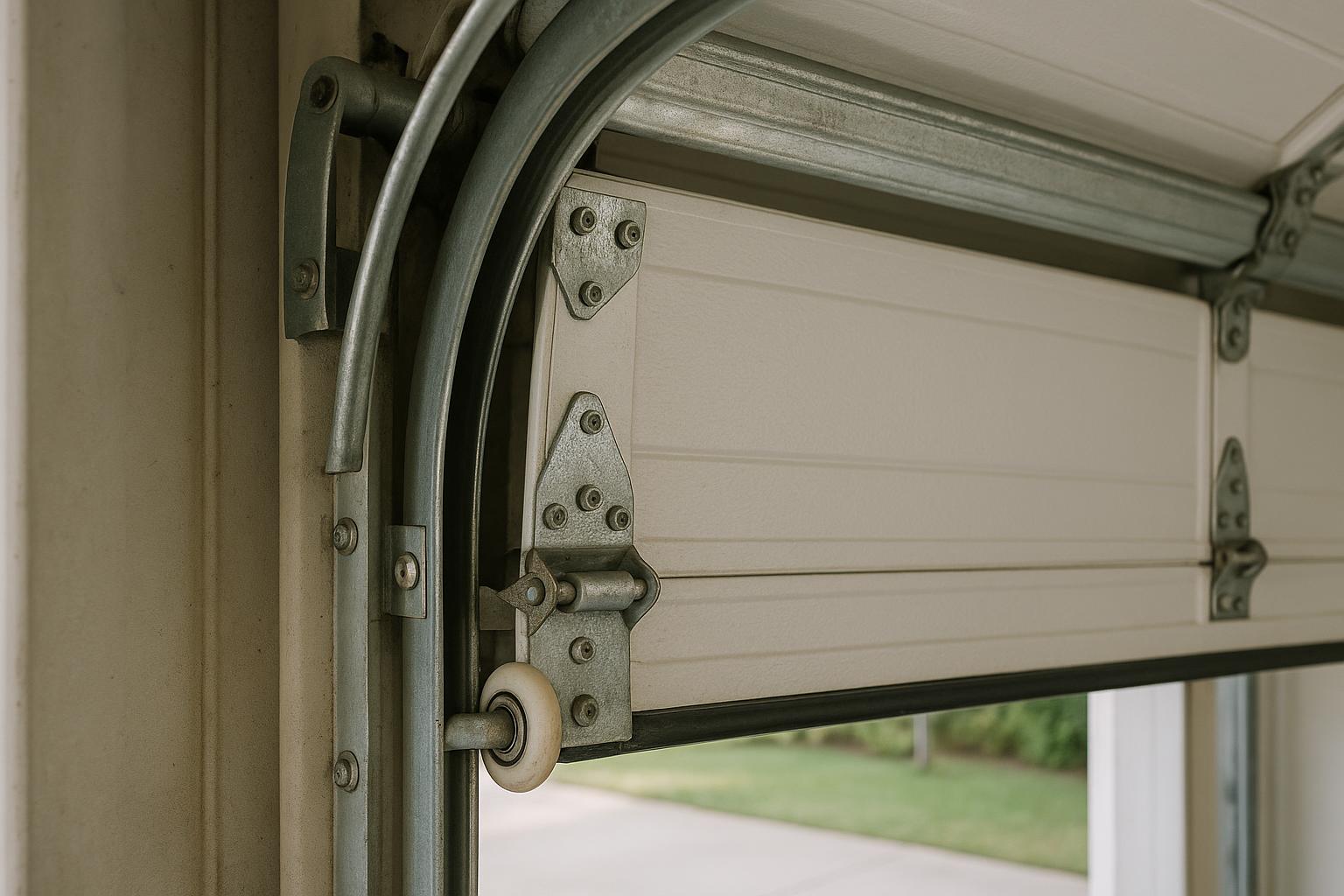
Your Garage Door Shouldn't Sound Like That
You press the button on your opener, and instead of a smooth, quiet operation, your garage door greets you with a symphony of grinding, squealing, banging, or rattling. If this sounds familiar, you're not alone. Noisy garage doors are one of the most common complaints we hear from homeowners in Raymore and the surrounding area.
The good news? Not every strange noise means you're facing a major repair. The bad news? Some of those sounds are warning signs of a serious problem that could get worse — and more expensive — if you ignore them. Let's break down the most common garage door noises, what causes them, and what you should do about each one.
Grinding or Scraping Sounds
A grinding or scraping noise is one of the more alarming sounds a garage door can make. It often feels like metal dragging against metal, and that's usually exactly what's happening.
Common Causes
- Worn rollers: Steel rollers wear down over time and can start grinding against the track. Nylon rollers are quieter and last longer, and upgrading to them is a popular fix among homeowners in Raymore.
- Misaligned tracks: If the vertical or horizontal tracks have shifted even slightly, the door can scrape against them as it moves. This puts extra stress on the entire system.
- Lack of lubrication: Dry metal components create friction, and friction creates noise. Regular lubrication is one of the simplest maintenance tasks you can do.
What to Do
Start by visually inspecting the rollers and tracks. If the rollers look worn, cracked, or chipped, it's time for a replacement. If the tracks appear bent or misaligned, don't try to force them back into place yourself — call a professional to realign them properly.
Squealing or Screeching Noises
A high-pitched squeal every time your door opens or closes is hard to ignore, especially early in the morning when the rest of the neighborhood is still sleeping.
Common Causes
- Dry bearings or hinges: The hinges that connect your door panels and the bearings in your rollers need periodic lubrication. Without it, they produce that unmistakable screech.
- Torsion spring issues: Springs under high tension can squeal when they're not properly lubricated or when they're beginning to wear out.
- Opener chain or belt tension: If you have a chain-drive opener, a loose or dry chain can squeal during operation.
What to Do
Apply a garage door-specific lubricant (not WD-40, which is a solvent, not a lubricant) to the hinges, rollers, bearings, and springs. Use a silicone-based or lithium grease spray. If the squealing persists after lubrication, the components may be worn and need replacement.
Popping or Snapping Sounds
Hearing a loud pop or snap when your garage door operates can be startling. Sometimes it happens once and goes away. Other times, it becomes a regular occurrence.
Common Causes
- Torsion spring adjustment: Springs can make a popping sound as they adjust to temperature changes, especially during the cold Missouri winters and warm summers we experience here in Raymore.
- Panels shifting: As the door moves along the track, panels can shift slightly and pop back into place.
- Spring failure warning: In some cases, a loud snap is the sound of a spring breaking. If your door suddenly won't open or feels extremely heavy, a broken spring is the likely culprit.
What to Do
If you hear a single loud snap followed by the door not working properly, do not attempt to operate the door. A broken spring is under extreme tension and can be dangerous. Contact a garage door technician right away for a safe replacement.
Rattling or Vibrating Noises
Rattling is one of the most common garage door noises, and fortunately, it's often one of the easiest to fix.
Common Causes
- Loose hardware: Over time, the nuts, bolts, and screws that hold your garage door system together can vibrate loose. This is especially common in older doors that have been through thousands of open-and-close cycles.
- Loose opener mounting: If the garage door opener itself isn't securely mounted to the ceiling, it can vibrate and rattle during operation.
- Worn chain or loose support rails: A chain-drive opener with a loose chain will rattle noticeably. The support rail that connects the opener to the door can also come loose.
What to Do
Grab a socket wrench and tighten all the visible bolts and brackets on the door, tracks, and opener mounting hardware. Be careful not to overtighten, as that can strip the holes or warp the tracks. If the rattling continues, the issue may be deeper in the system and worth having a technician inspect.
Banging or Slamming Sounds
If your garage door slams shut rather than closing smoothly, something is off with the balance or the opener settings.
Common Causes
- Broken or weakened springs: Springs counterbalance the weight of the door. When they weaken, the door becomes heavier than the opener can control, causing it to drop quickly.
- Opener force settings: The close-force setting on your opener may be set too high, causing the door to descend faster than it should.
- Disconnected lift cable: If a lift cable has come off the drum, one side of the door may drop faster than the other, creating a banging sound.
What to Do
A door that slams shut is a safety hazard, especially if you have children or pets. Stop using the door and call a professional to inspect the springs, cables, and opener settings. This is not a DIY repair.
When to Call a Professional
Some garage door noises can be resolved with a can of lubricant and a wrench. Others require the expertise and tools of a trained technician. Here's a quick rule of thumb:
- DIY-friendly: Lubricating hinges, rollers, and springs. Tightening loose bolts and brackets.
- Call a pro: Broken or worn springs, misaligned tracks, cable issues, opener motor problems, or any situation where the door feels unusually heavy or operates erratically.
Ignoring persistent noises doesn't just mean living with the annoyance — it can lead to more expensive repairs down the road or even a complete door failure at the worst possible time.
Keep Your Garage Door Running Quietly
The best way to prevent noisy garage door problems is with regular maintenance. A professional tune-up once or twice a year keeps all the components lubricated, tightened, and properly adjusted. It's a small investment that extends the life of your door and keeps things running smoothly and quietly.
At Raymore Garage Door Solutions, we help homeowners across Raymore, Belton, Lee's Summit, Peculiar, Harrisonville, and Pleasant Hill diagnose and fix noisy garage doors every day. Whether you need a simple tune-up or a full repair, we show up on time and get the job done right. If your garage door is making a noise that doesn't sound normal, give us a call — we're happy to take a listen and figure out what's going on.