
Your Garage Door Springs Are Doing More Work Than You Think
Every time you open or close your garage door, the springs are doing the heavy lifting — literally. A standard two-car garage door can weigh anywhere from 150 to 250 pounds, and without properly functioning springs, your opener alone can't handle that load. Over time, those springs wear out, and when they fail, your garage door becomes inoperable or even dangerous.
For homeowners in Raymore, where we rely on our garages year-round for everything from parking to storage to workshop space, understanding the lifespan of your garage door springs can save you from unexpected breakdowns and costly emergency repairs.
How Long Do Garage Door Springs Typically Last?
The lifespan of a garage door spring is measured in cycles. One cycle equals one full open and one full close of the door. Most standard torsion springs are rated for approximately 10,000 cycles, which translates to roughly 7 to 10 years of average use.
However, that number can vary significantly based on several factors:
- Frequency of use: If you use your garage door four or more times a day (common for busy families), your springs will wear out faster than the average estimate.
- Climate and temperature swings: Here in the Raymore area, we experience everything from humid summers to freezing winters. Metal expands and contracts with temperature changes, which adds stress to springs over time.
- Maintenance habits: Springs that are regularly lubricated and inspected tend to last longer than those that are neglected.
- Spring quality: Not all springs are created equal. Higher-cycle springs (rated for 20,000 or even 25,000 cycles) are available and can double the lifespan of your system.
Torsion Springs vs. Extension Springs: What's the Difference?
There are two main types of garage door springs, and knowing which type you have helps you understand what to expect when it comes to replacement.
Torsion Springs
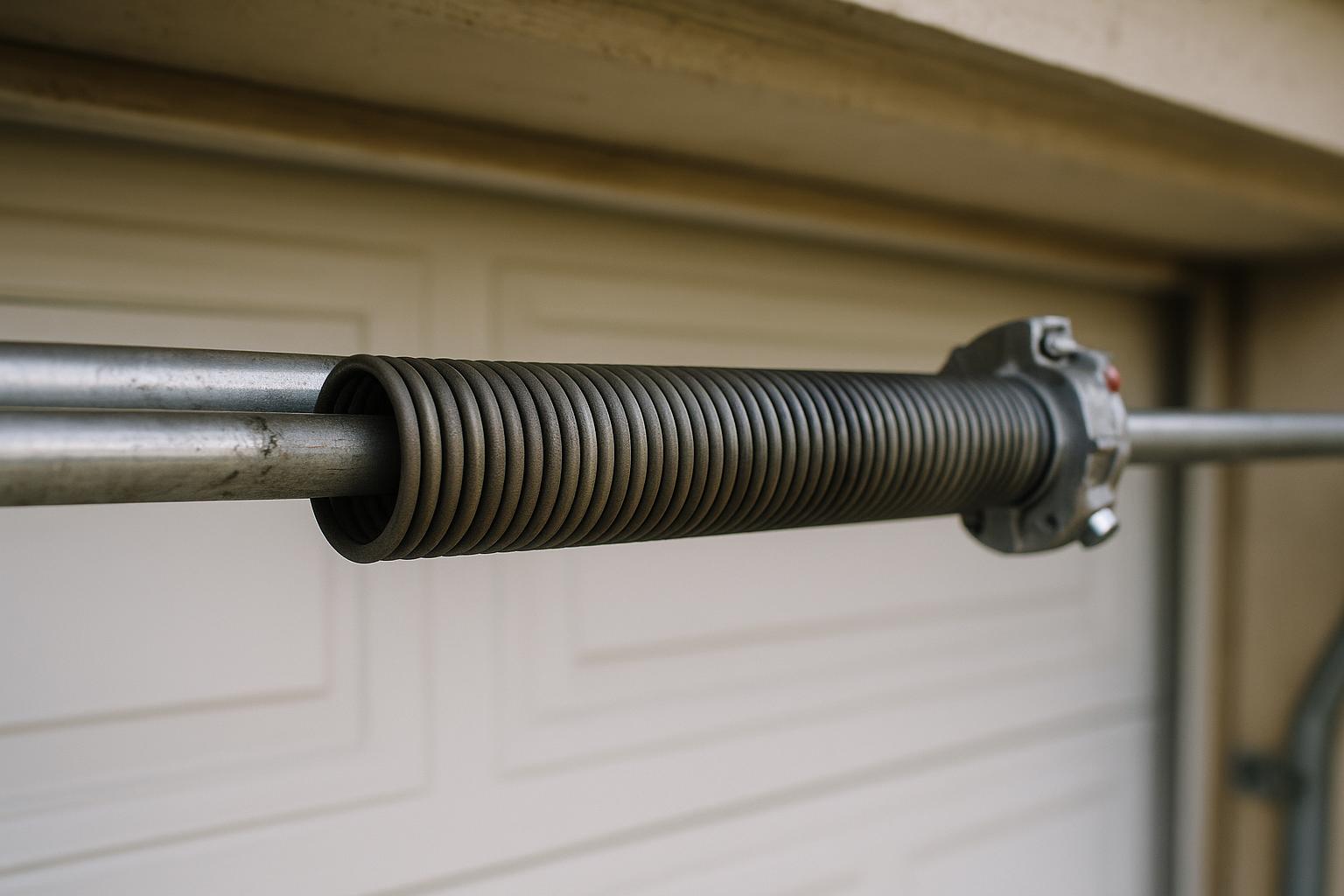
Torsion springs are mounted on a metal shaft directly above the garage door opening. They use torque to lift the door and are the more common type found on modern garage doors. Torsion springs tend to last longer, operate more smoothly, and are generally considered safer than extension springs.
Extension Springs
Extension springs run along the horizontal tracks on either side of the door. They stretch and contract to provide lifting force. While they're less expensive upfront, extension springs typically have a shorter lifespan and can pose a safety risk if they snap without a safety cable in place.
If your home in Raymore still has extension springs, it may be worth considering an upgrade to torsion springs during your next replacement. The investment pays off in durability and safety.
Warning Signs Your Garage Door Springs Need Replacement
Springs rarely fail without giving you some advance warning. Here are the most common signs that your garage door springs are nearing the end of their life:
- The door feels heavier than usual: If your garage door seems difficult to lift manually, the springs may be losing tension.
- The door opens unevenly: When one spring wears out faster than the other, the door may tilt or rise crookedly.
- You hear loud squeaking or grinding: While some noise is normal, excessive squeaking or grinding can indicate that the springs are dry, corroded, or worn.
- Visible gaps in the spring coils: A healthy torsion spring has tightly wound coils. If you notice gaps or separation, the spring is stretched beyond its useful life.
- The door slams shut quickly: This is a dangerous sign that the springs can no longer control the weight of the door during closing.
- A loud bang from the garage: If you heard a loud bang — almost like a firecracker — coming from your garage, a spring has likely already snapped. This is the most obvious sign, and it means you should not attempt to operate the door until a professional inspects it.
Can You Replace Garage Door Springs Yourself?
We understand the DIY spirit — many Raymore homeowners are handy and capable of tackling home improvement projects. However, garage door spring replacement is one job we strongly recommend leaving to professionals. Here's why:
- Extreme tension: Garage door springs are under tremendous tension. A torsion spring that snaps or is improperly handled during replacement can cause serious injury or even death.
- Specialized tools required: Proper spring replacement requires winding bars, vice grips, and other specialized tools that most homeowners don't have on hand.
- Precise calibration: Springs must be wound to the correct tension for your specific door weight and size. Incorrect calibration can damage your opener, wear out the new springs prematurely, or create a safety hazard.
A trained technician can typically complete a spring replacement in under an hour, ensuring the job is done safely and correctly.
Should You Replace One Spring or Both?
If one spring breaks, you might wonder whether you need to replace just the broken one or both. Our recommendation is almost always to replace both springs at the same time. Here's the reasoning:
- If one spring has reached the end of its lifespan, the other is likely not far behind.
- Replacing both ensures even tension and balanced operation of the door.
- It saves you the cost of a second service call when the remaining old spring inevitably fails.
Think of it like replacing tires on your car — you want even wear for the best performance and safety.
How Regular Maintenance Extends Spring Life
One of the best things you can do to get the most out of your garage door springs is to invest in regular maintenance. A simple maintenance routine includes:
- Lubricate the springs with a silicone-based spray every three to four months. This reduces friction and prevents rust.
- Visually inspect the springs for signs of wear, rust, or gaps in the coils.
- Test the door balance by disconnecting the opener and manually lifting the door halfway. If it stays in place, the springs are properly balanced. If it falls or rises, the tension needs adjustment.
- Schedule a professional tune-up at least once a year. A technician can catch small issues before they turn into expensive problems.
At Raymore Garage Door Solutions, our maintenance service covers all of these steps and more, giving you peace of mind that your door is operating safely and efficiently.
Don't Wait for a Breakdown
A broken garage door spring is more than an inconvenience — it can leave your home unsecured, your car trapped inside, and your family at risk if the door falls unexpectedly. If your springs are approaching the 7 to 10 year mark, or if you've noticed any of the warning signs listed above, now is the time to act.
Whether you're in Raymore, Belton, Lee's Summit, Peculiar, or any of the surrounding communities, our team is ready to help with fast, reliable spring replacement and garage door maintenance. We show up on time, explain what needs to be done, and get your door back in working order — no surprises, no runaround.
Give Raymore Garage Door Solutions a call today to schedule an inspection or spring replacement. Your garage door works hard for you every day — make sure it has the support it needs to keep going.