
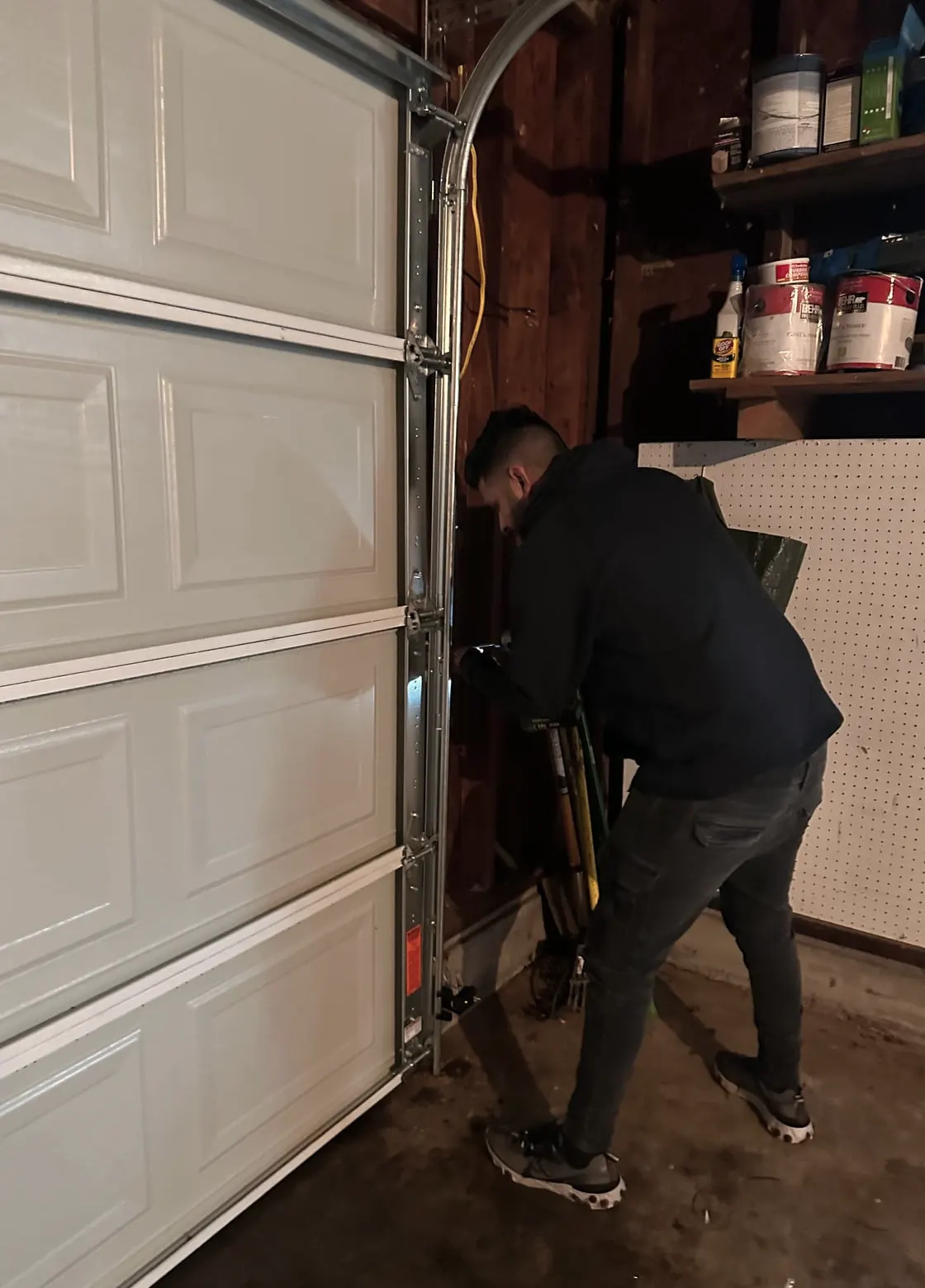
The Call That Starts With an Argument
We get this one a lot: a couple calls about a new garage door, and before we even get a tape measure out, one of them says something like, "I told you we need to check with the HOA first," and the other says, "It's our door, we can do whatever we want." Both of them look at the technician like we're supposed to settle it. Here's the honest answer — it depends on what you're changing, where you live, and what Missouri's building codes say about wind resistance. None of those three things are optional, and none of them are as scary as they sound once you know what's actually being checked.
What an HOA Actually Controls
Homeowners associations generally don't care about the mechanical guts of your garage door — the springs, the opener, the track hardware. What they care about is how the door looks from the street. Common HOA restrictions include:
- Approved door styles (raised panel vs. flush, carriage-house vs. plain)
- Color — often limited to the home's existing trim color or a short approved list
- Window inserts — some HOAs require them, others ban them entirely
- Material — some communities restrict reflective or unusually glossy finishes
If your subdivision has an HOA, the deed restrictions or covenants you signed at closing should spell this out. Many associations require a simple architectural review form before installation, not a lengthy approval process — but skipping it can mean a letter in the mail and a request to redo the work at your own cost. The spouse who says "check first" is usually protecting you from that headache, not being difficult.
Permits: Smaller Deal Than People Think, But Still a Thing
A straight swap — same size opening, same general door type, replacing an existing garage door — is often treated as a minor repair in many jurisdictions and doesn't always trigger a permit. But if any of the following apply, a permit becomes more likely:
- You're widening or changing the size of the opening
- You're changing the structural header above the door
- The project is part of a larger renovation (new garage, addition, etc.)
- You're adding electrical for a new opener circuit
The only way to know for sure is to call your local building department directly and describe the exact scope of work. It's a five-minute phone call, and it's free. Skipping it isn't usually a safety issue for a simple swap — but if you ever sell the house, an inspector or buyer's agent noticing unpermitted structural work can slow down or complicate the sale.
Wind-Load Codes: The Part Most Homeowners Never Think About
This is the piece that actually matters most for this part of Missouri. Spring storm season here can bring serious straight-line winds and tornado risk, and garage doors are one of the most common failure points on a home during high wind events — once a garage door fails, wind pressure gets inside the structure and can lift the roof. Building codes in wind-prone regions often specify a minimum wind-load rating for garage doors, meaning the door, its track, and its reinforcement have to be engineered to withstand a certain pressure without buckling.
In practice, this shows up in a few ways when you're choosing a replacement:
- Reinforced panels — heavier gauge steel or added horizontal struts behind each panel
- Reinforced track and end brackets — stronger hardware anchoring the door to the frame
- Wind-load rated models — manufacturers list a pressure rating (often in pounds per square foot) for doors built to meet higher-wind-zone requirements
A standard big-box store door and a wind-load rated door can look identical from the driveway and cost noticeably different amounts — that price difference is the engineering, not upselling. If your home is in a more exposed location or you've had wind damage before, it's worth asking specifically for a wind-rated option rather than assuming the cheapest listed door will hold up the next time a spring storm rolls through.
How to Actually Settle the Argument
Here's the simple order of operations that avoids redoing work or paying twice:
- Check HOA covenants for style, color, and window restrictions before you pick a door
- Call the local building department to ask if your specific project needs a permit
- Ask your installer directly whether the door you're considering meets wind-load expectations for this area
Whoever in the household does this legwork first basically wins the argument, because it turns a guessing match into a short checklist.
When to Call Raymore Garage Door Solutions
If you're ready to replace a door and want someone who already knows what questions to ask about structural bracing and wind-resistant hardware, that's where our Garage Door Installation service comes in — we'll walk you through door options that meet the demands of our storm season, not just the lowest price point. And if you're not sure whether your current door would survive a bad windstorm as-is, our Garage Door Maintenance visits include a check of your track, hinges, and reinforcement so you know before severe weather season, not during it.
If you're in Raymore, MO or nearby and need a straight answer about your next garage door project, give Raymore Garage Door Solutions a call — we'll help you get it right the first time.