
Get Your Garage Door Ready Before Missouri's First Hard Freeze
A typical late-October service call starts the same way: the homeowner says the door worked fine all summer, but now it's groaning on the way up, hesitating halfway down, or the opener sounds like it's straining. A technician pulls up and usually finds the same handful of culprits — weatherstripping that cracked in the September heat, hinges and rollers that haven't seen lubricant since spring, and a torsion spring that's tightened up in the cooler air. None of it is dramatic on its own, but stacked together it's exactly what turns a working door into a stuck one on the first morning the temperature drops into the 20s.
This part of Missouri doesn't ease into winter. You go from humid, sticky summer days to a hard freeze with ice on the driveway in a matter of weeks, and the garage door takes the full brunt of that swing. A little attention now, before the first cold snap, saves you from dealing with a frozen or sluggish door on a morning when you're already running late.
Weatherstripping and Seals
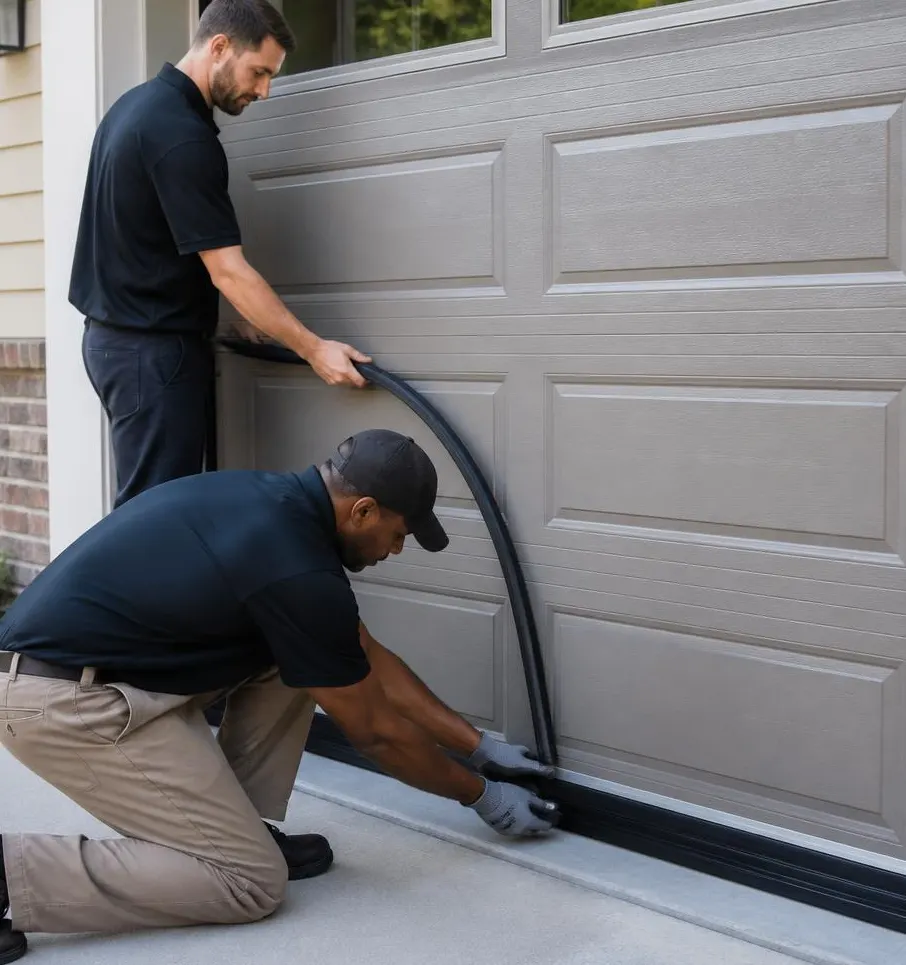
Check the rubber seal along the bottom of the door and the vinyl stripping around the sides and top. Summer heat makes rubber brittle, and by fall it's common to find cracks, gaps, or sections that have pulled away from the track. A failed seal lets cold air, wind-driven rain, and eventually ice straight into the garage. Replacement seal kits are inexpensive and are one of the highest-value things you can do before winter — it's a simple fix that keeps the garage noticeably warmer and keeps meltwater from pooling under the door.
Lubrication Before the Cold Sets In
Hinges, rollers, and the torsion spring itself all need a light coat of garage-door-specific lubricant (not WD-40, which washes grease out rather than replacing it) before temperatures drop. Cold metal is less forgiving — dry hinges that squeaked a little in July can start binding in January. Spend ten minutes running a lubricant along every hinge point and roller track while it's still comfortable to be out there; it's a much less pleasant job once there's ice on the ground.
Track and Roller Inspection
Walk the full length of both tracks and look for dirt, leaf debris, or rust starting to form. Once winter arrives, rock salt and ice-melt tracked in from the driveway can accelerate corrosion on tracks and rollers, especially in garages that see a lot of truck or SUV traffic. Wipe tracks down now and check that they're still plumb and securely fastened — a track that's slightly bent from a bump over the summer will only get worse once ice adds extra resistance to the door's movement.
Opener and Battery Backup
Cold weather is hard on batteries, including the backup battery in openers that have one. Test it now rather than discovering it's dead during a winter power outage. Also listen for any new noise or hesitation when the opener runs the door through a full cycle — a motor that's already working harder than it should in October will struggle more once it's fighting cold, stiff springs in December.
Insulation for Attached Garages
If the garage is attached to the house, an insulated door (or an insulation retrofit kit on an existing door) makes a real difference during Missouri's bigger cold stretches. It keeps the garage itself warmer, which protects anything stored out there — paint, pet food, water lines — and reduces how much cold transfers into an adjoining mudroom or laundry area.
Exterior Hardware and the Concrete Apron
Check that the concrete apron in front of the door slopes away and drains properly; standing water there freezes and can lock the bottom of the door to the ground overnight. Also give exterior hardware — handles, locks, the bottom brackets — a quick inspection for rust starting to form after a humid summer.
When to Call Raymore Garage Door Solutions
If you're hearing new strain from the opener, the door feels heavier than it should when moving manually, or the weatherstripping is too far gone to simply replace yourself, that's the point to call in a technician rather than wait for a winter morning to force the issue. Our Garage Door Maintenance visits cover a full inspection of springs, cables, rollers, and the opener system, and we handle Garage Door Opener Service for anything from a weak battery backup to a motor that's audibly working too hard. Catching these issues in October is a lot easier than troubleshooting them in a driveway full of ice.
If your garage door needs attention before the cold really sets in, call Raymore Garage Door Solutions today — we serve homeowners throughout Raymore, MO and the surrounding area.